2-Hole, 4-Hole or Shank Buttons: Which Construction Is Right for Your Garment?
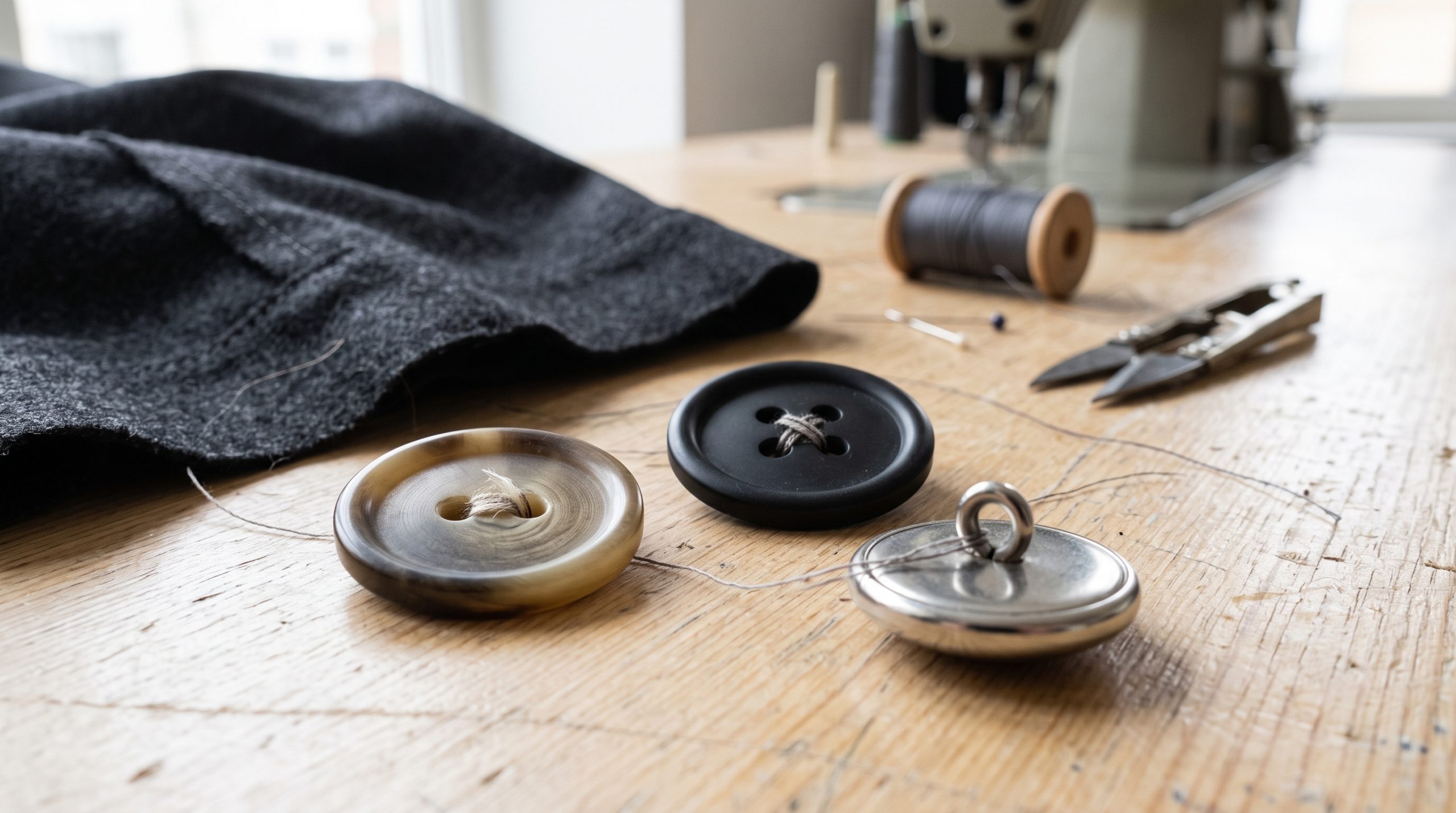
When choosing garment buttons, color and size are not the only factors to consider. The button construction on the back can also affect sewing, appearance and garment application.
For garment buyers, fashion brands and garment manufacturers, choosing between 2-hole, 4-hole and shank buttons should be based on the garment type, fabric, sewing method and overall design.
2-Hole Buttons
Two-hole buttons have a simple construction and a clean appearance. They can work well for shirts, fashion garments and minimalist designs.
They are often suitable when the button itself is intended to remain visually simple.
4-Hole Buttons
Four-hole buttons are widely used for garments and provide more flexibility in sewing patterns.
They can be used for shirts, jackets, casualwear and many general garment applications.
The four holes can also become part of the visual design. Thread color and sewing patterns can be coordinated with the garment’s overall design direction.
Shank Buttons
Shank buttons have a raised attachment point on the back instead of visible holes through the button face.
This creates a cleaner front appearance and can give the garment a more refined look. Shank buttons are often considered for suits, jackets and selected fashion garments.
The shank height and back construction should be considered together with fabric thickness and sewing requirements.

Which Button Construction Should You Choose?
There is no single construction that works best for every garment.
The right choice depends on the fabric, garment application, sewing method and design direction.
For new collections, it is useful to evaluate button construction together with size, material and sewing requirements during sample development. Developing a new garment collection? Contact Union Button to discuss your button requirements or request a sample.
Contact us for inquiries or to place an order:
- 📲Line OA : https://lin.ee/nuYPCv7
- 🌐Website : www.union-button.com
- 📸IG : @unionbutton.bkk
- 🎵TikTok : @unionbutton.bkk
- Shopee : https://shopee.co.th/shop/1229406768