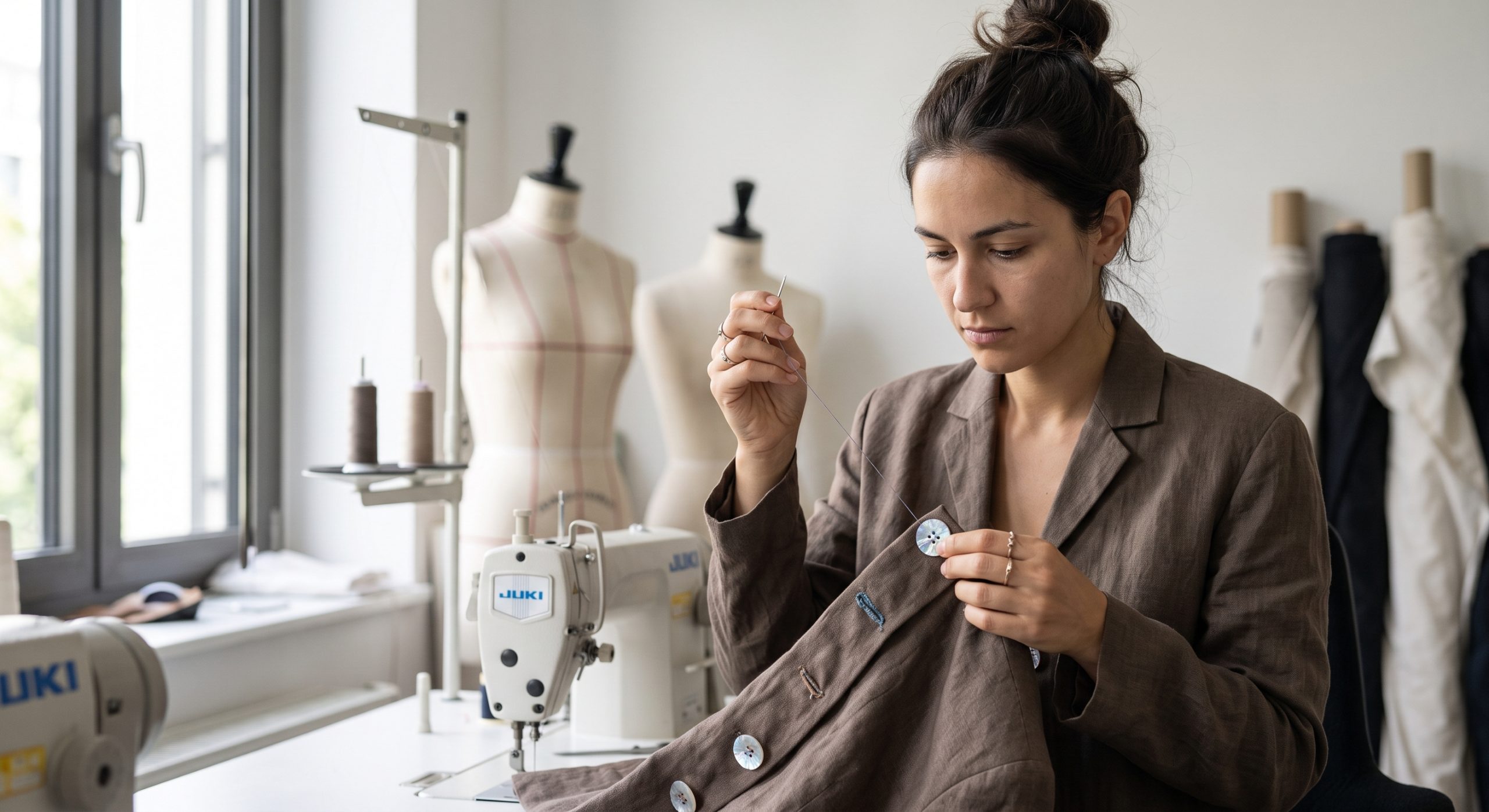
Buttons are one of the garment trims that need to work together with the fabric, buttonhole and sewing process.
Choosing a garment button should therefore involve more than appearance. Buyers should also consider whether the button construction is suitable for the garment and sewing method.
1. Button Construction Affects Sewing
2-hole, 4-hole and shank buttons have different back constructions, which can affect how they are attached and how the thread is positioned.
For garment production, the button construction should be considered together with the actual sewing method.
2. Button Thickness Should Work with the Garment
Button thickness and back construction should be considered together with fabric thickness and the area where the button will be attached.
This can be particularly relevant for jackets, coats and garments made with multiple layers.
3. The Buttonhole Must Work with the Button
A buttonhole should not be considered separately from the button.
If the buttonhole is not suitable for the button’s size and shape, fastening may become difficult and the overall garment appearance may be affected.
During sample development, it is useful to evaluate the Button + Buttonhole + Fabric together.
4. Button Placement Affects Garment Construction
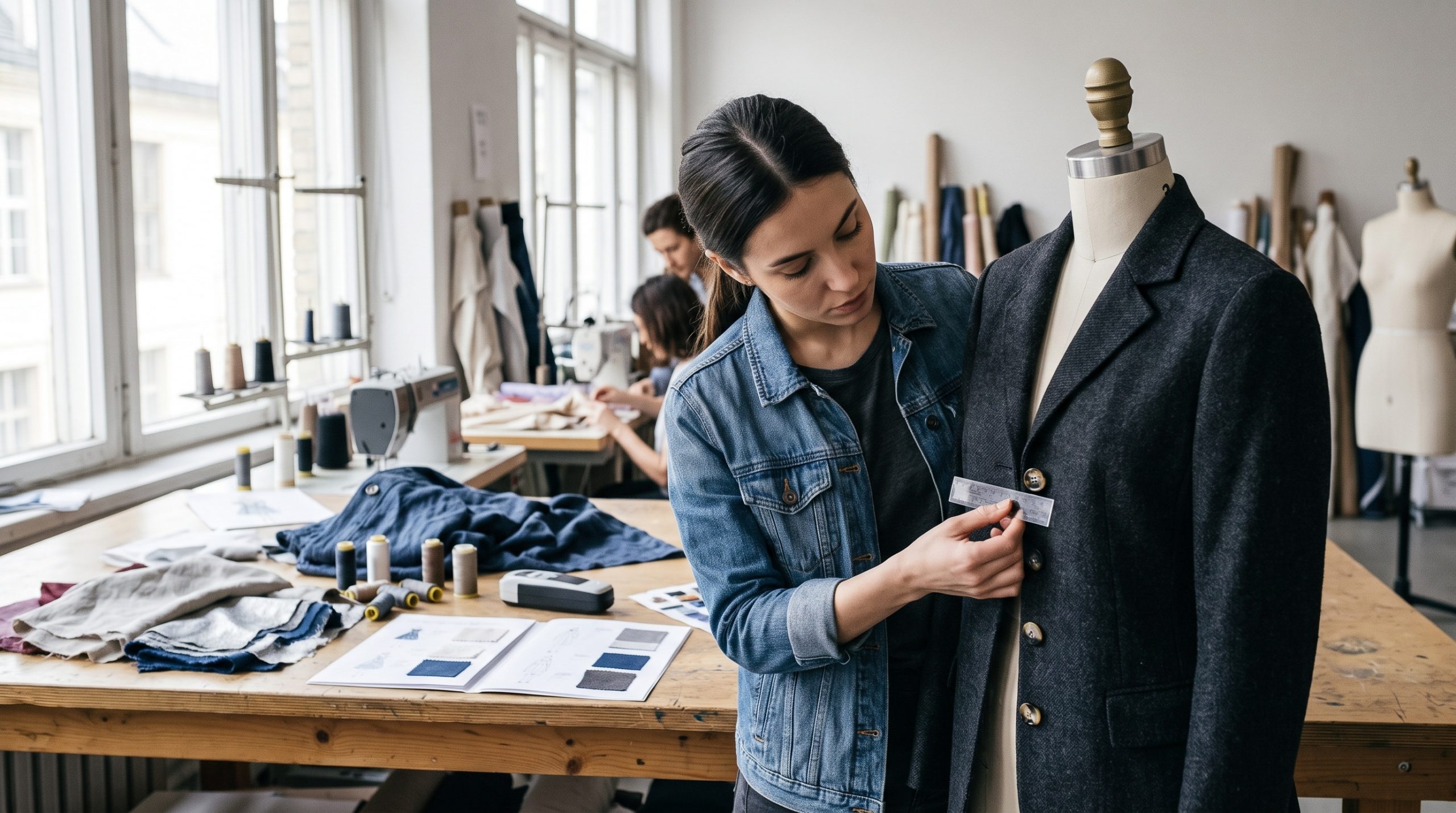
Button placement is not only a design decision. It can also affect the garment closure and where tension is applied to the fabric.
For frequently used garments such as shirts, jackets and workwear, button placement and attachment should be considered during sample development.
5. Test the Button on the Actual Garment
A button may look suitable as an individual sample but perform or appear differently once attached to the actual garment.
Before bulk production, buyers should evaluate:
- Button
- Fabric
- Buttonhole
- Thread
- Sewing Method
- Garment Construction
Choosing the right button for garment production is not only about color and design. The button also needs to work with the sewing process and the construction of the garment.
Considering these factors during sample development can help fashion brands and garment buyers evaluate button suitability before moving into bulk production.
Developing buttons for garment production? Contact Union Button to discuss your button requirements and sample development.
Contact us for inquiries or to place an order:
- 📲Line OA : https://lin.ee/nuYPCv7
- 🌐Website : www.union-button.com
- 📸IG : @unionbutton.bkk
- 🎵TikTok : @unionbutton.bkk
- Shopee : https://shopee.co.th/shop/1229406768
Button color may seem like a small detail, but it can influence the overall appearance of a garment.
For fashion brands and garment buyers, choosing a button is not simply about finding the same color as the fabric. It is also about considering contrast, finish, texture and the overall collection.
- Create a Harmonious Look
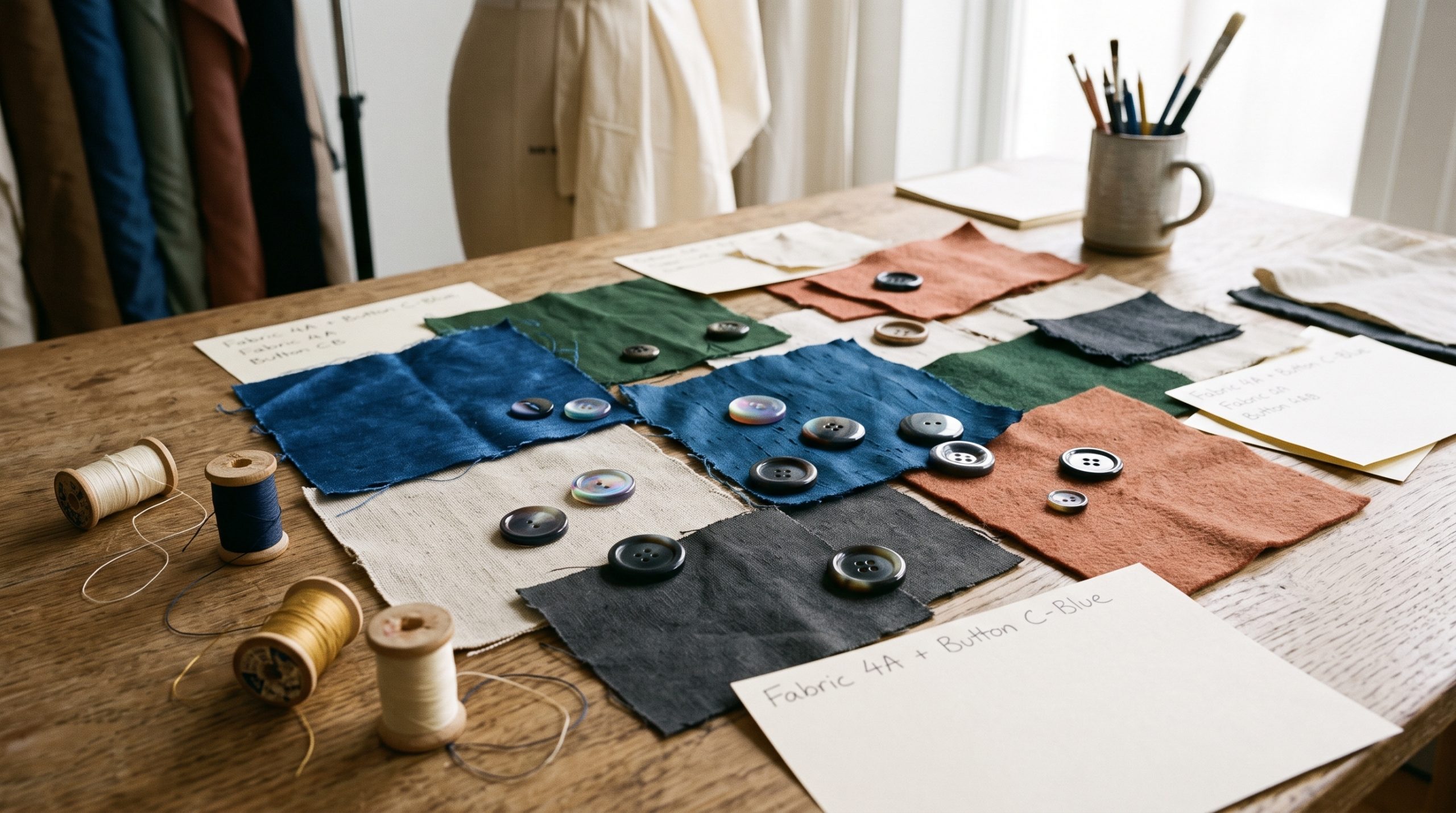
Buttons close in color to the fabric can create a clean and coordinated appearance.
This approach works well for minimal fashion, basic shirts, uniforms and contemporary garments.
However, if the colors are too similar, the button may visually disappear. Finish and texture can help create more definition.
2. Use Contrast as a Design Element
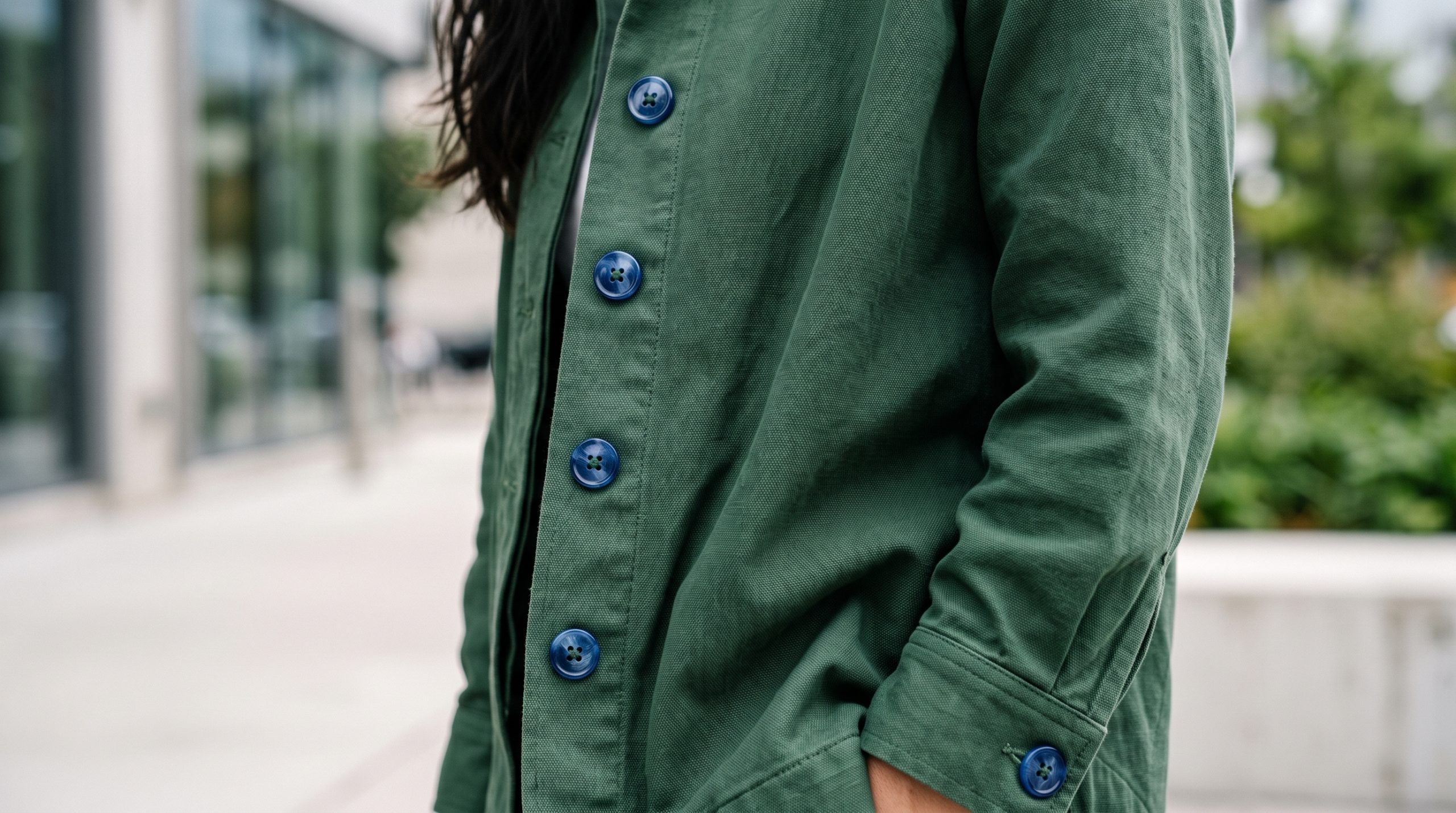
A contrasting button can make the button an intentional part of the garment design.
For example, a dark fabric can be paired with a lighter button, while a light garment can use a darker button for visual contrast.
3. Consider Finish, Not Just Color
The same color can look very different depending on the button finish.
Matte creates a subtle appearance.
Glossy gives stronger light reflection.
Pearl adds depth and softness.
Metallic creates a visual accent.
This is why button selection should consider Color + Finish + Fabric Texture together.
4. Check Against the Actual Fabric
Colors displayed on screens may not always represent the physical material accurately.
For production development, providing a fabric swatch or reliable color reference can help the button manufacturer evaluate the color requirement more accurately.
5. Look at the Whole Collection
For fashion collections, evaluate the button together with the fabric, thread, trims and overall color palette.
The goal is not simply to make the button match the fabric, but to make the button work with the complete garment design.
Have a fabric swatch or color reference for your next collection? Contact Union Button to discuss button color and finish requirements.
Contact us for inquiries or to place an order:
- 📲Line OA : https://lin.ee/nuYPCv7
- 🌐Website : www.union-button.com
- 📸IG : @unionbutton.bkk
- 🎵TikTok : @unionbutton.bkk
- Shopee : https://shopee.co.th/shop/1229406768
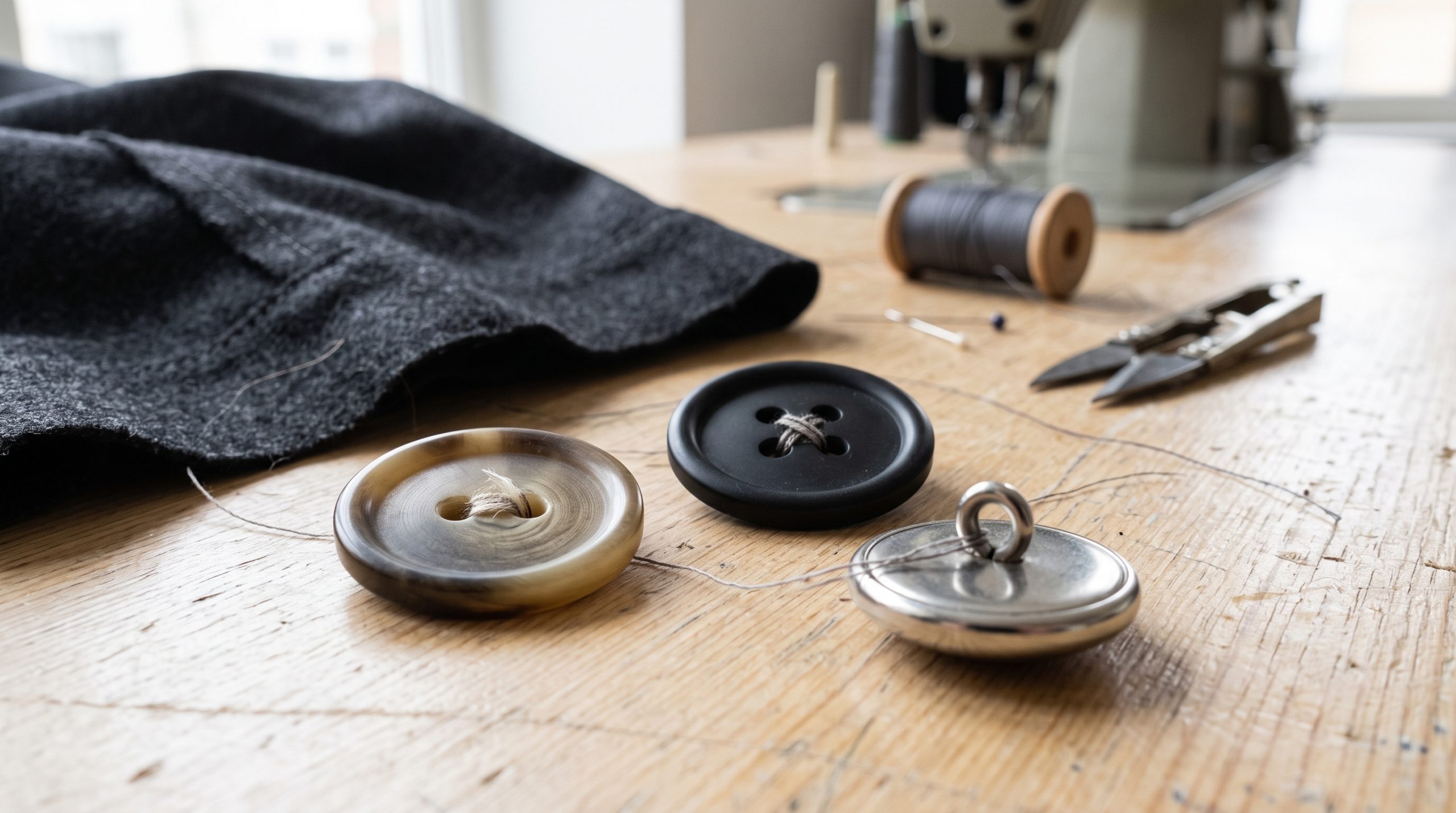
When choosing garment buttons, color and size are not the only factors to consider. The button construction on the back can also affect sewing, appearance and garment application.
For garment buyers, fashion brands and garment manufacturers, choosing between 2-hole, 4-hole and shank buttons should be based on the garment type, fabric, sewing method and overall design.
2-Hole Buttons
Two-hole buttons have a simple construction and a clean appearance. They can work well for shirts, fashion garments and minimalist designs.
They are often suitable when the button itself is intended to remain visually simple.
4-Hole Buttons
Four-hole buttons are widely used for garments and provide more flexibility in sewing patterns.
They can be used for shirts, jackets, casualwear and many general garment applications.
The four holes can also become part of the visual design. Thread color and sewing patterns can be coordinated with the garment’s overall design direction.
Shank Buttons
Shank buttons have a raised attachment point on the back instead of visible holes through the button face.
This creates a cleaner front appearance and can give the garment a more refined look. Shank buttons are often considered for suits, jackets and selected fashion garments.
The shank height and back construction should be considered together with fabric thickness and sewing requirements.

Which Button Construction Should You Choose?
There is no single construction that works best for every garment.
The right choice depends on the fabric, garment application, sewing method and design direction.
For new collections, it is useful to evaluate button construction together with size, material and sewing requirements during sample development. Developing a new garment collection? Contact Union Button to discuss your button requirements or request a sample.
Contact us for inquiries or to place an order:
- 📲Line OA : https://lin.ee/nuYPCv7
- 🌐Website : www.union-button.com
- 📸IG : @unionbutton.bkk
- 🎵TikTok : @unionbutton.bkk
- Shopee : https://shopee.co.th/shop/1229406768
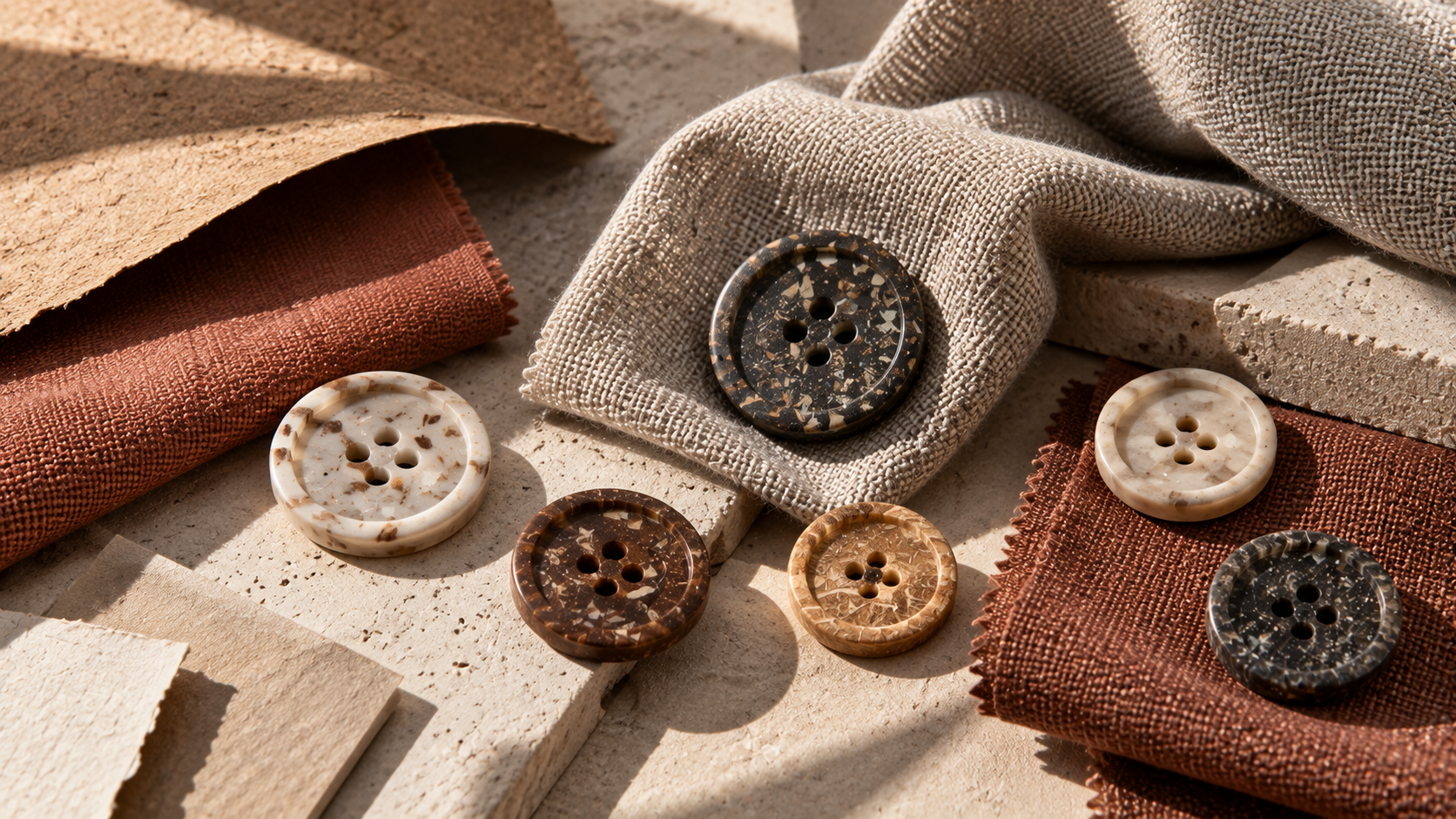
When fashion brands explore alternative materials for a collection, fabric is not the only component to consider. Small garment components such as upcycled buttons can also contribute to a product’s material story.
However, upcycled buttons are not a single type of product. Different materials can create different colors, textures and appearances.
What Is an Upcycled Button?
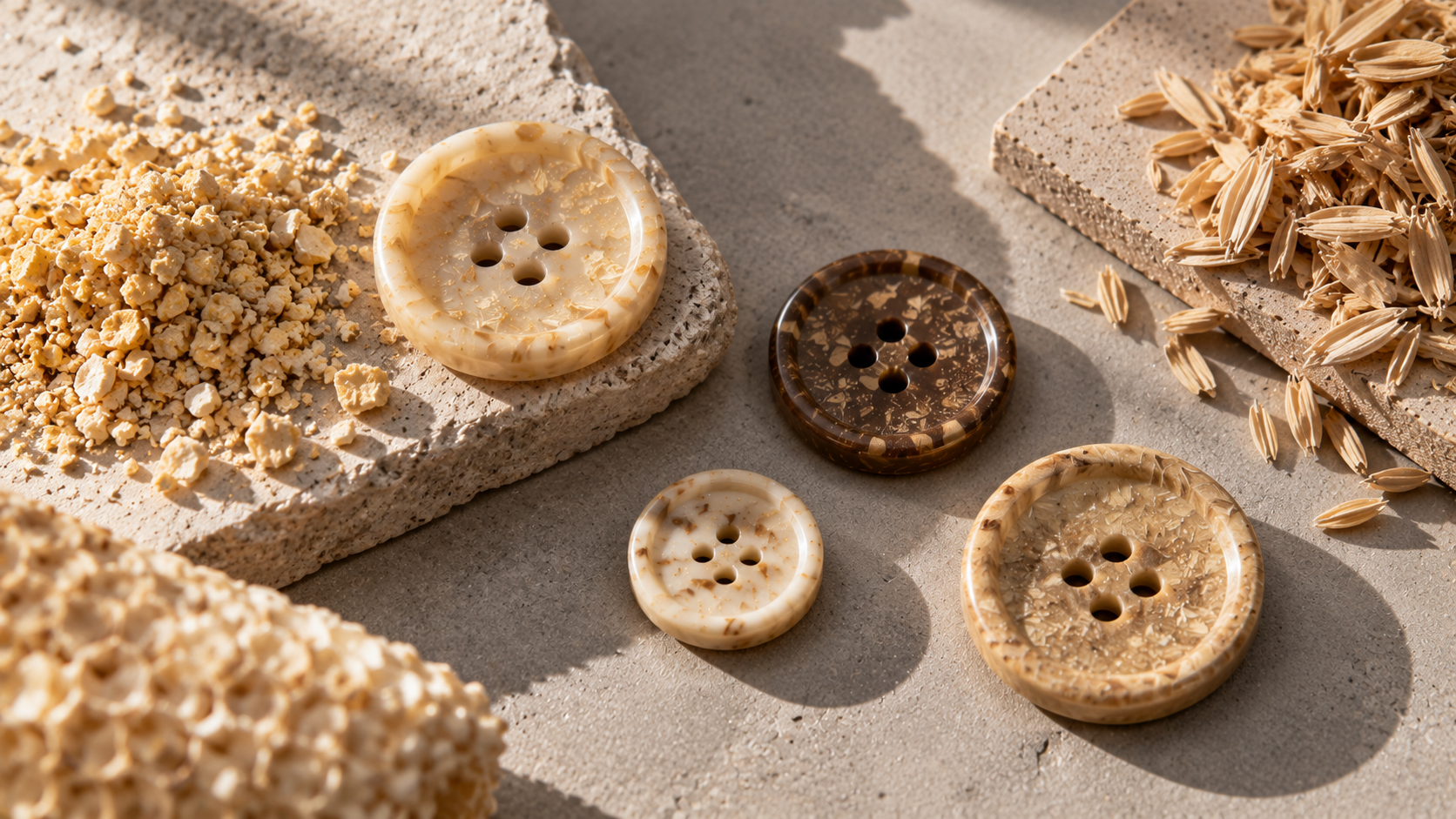
In button development, upcycling can involve taking existing or leftover materials and incorporating them into a new product component rather than treating them only as waste.
Materials, composition, manufacturing processes and performance can vary between products, so actual product specifications should always be reviewed.
Corn Cob Buttons
Corn-derived leftover material can be incorporated as a component in the development of upcycled buttons.
The final appearance and texture depend on factors such as material formulation, color, shape and manufacturing process. Physical samples should therefore be evaluated with the intended garment fabric.
Rice Husk Buttons
Rice husks are another material that can be incorporated into button development.
For designers, the material story is only one consideration. Color, texture, button shape and compatibility with the garment design should also be evaluated.
Other Upcycled Materials
Upcycled button development can involve different material stories depending on the available material and manufacturing process. Before using these buttons in a collection, buyers should request relevant material specifications from the supplier and avoid environmental claims that go beyond the information that can be verified.
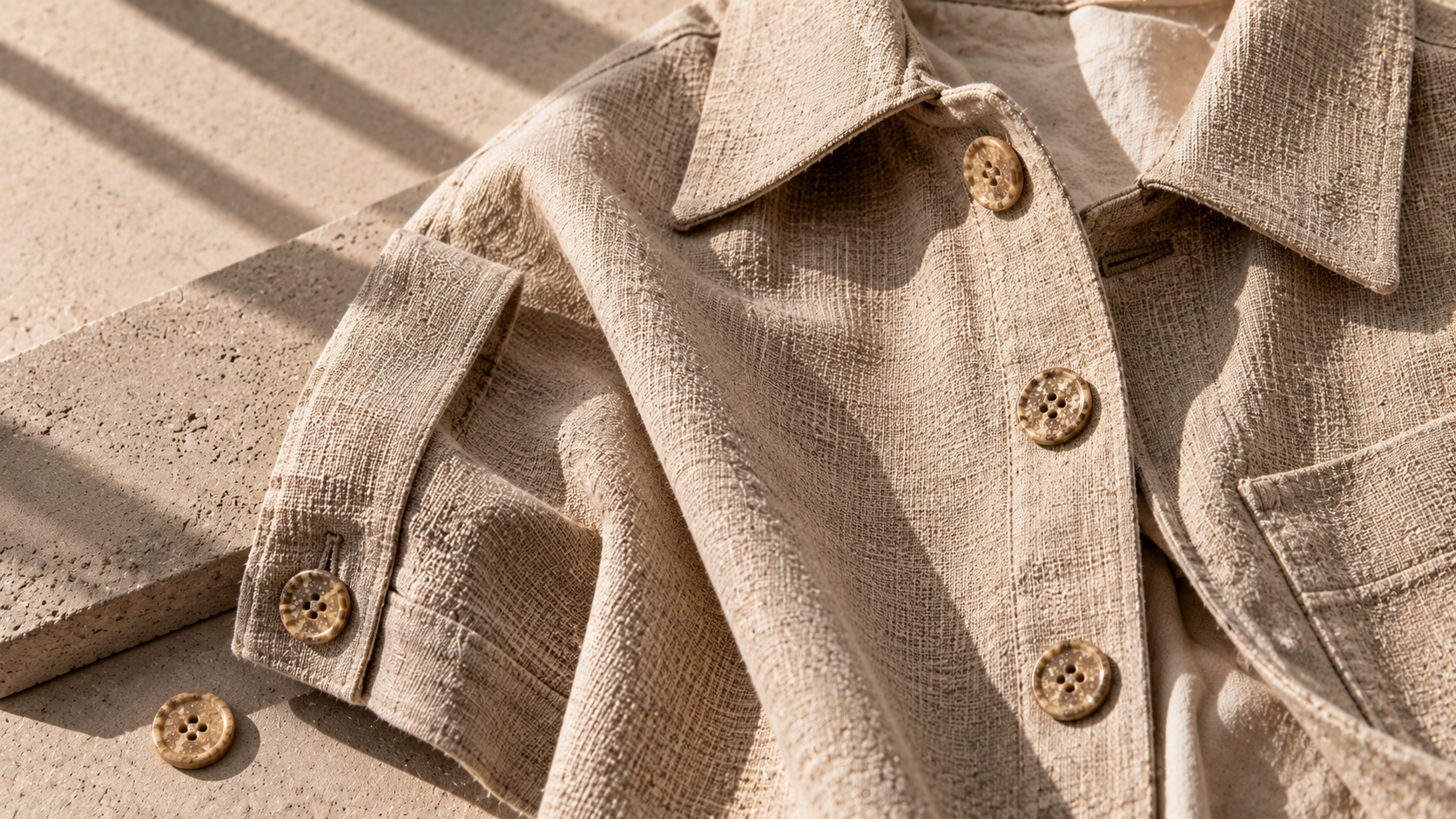
What Should Buyers Ask Before Selecting an Upcycled Button?
Fashion brands and garment buyers should consider the material or component used, appearance and texture, available colors and sizes, MOQ and lead time, relevant testing or compliance requirements, and whether the supplier can provide the material information required by the project.
Better Sustainability Decisions Start with Better Information
Selecting sustainable garment accessories should involve more than choosing a product because it is described as “eco-friendly.”
For B2B buyers, understanding the material, application, production requirements and verifiable information is important when evaluating alternatives.
Union Button develops Sustainable and Upcycle button options using different materials for garment and fashion accessory applications.
Exploring upcycled buttons for a new collection? Contact our team to request product information, samples or discuss your material requirements.
Contact us for inquiries or to place an order:
- 📲Line OA : https://lin.ee/nuYPCv7
- 🌐Website : www.union-button.com
- 📸IG : @unionbutton.bkk
- 🎵TikTok : @unionbutton.bkk
- Shopee : https://shopee.co.th/shop/1229406768
Glitter buttons can add visual interest to a garment without changing the main structure of the design.
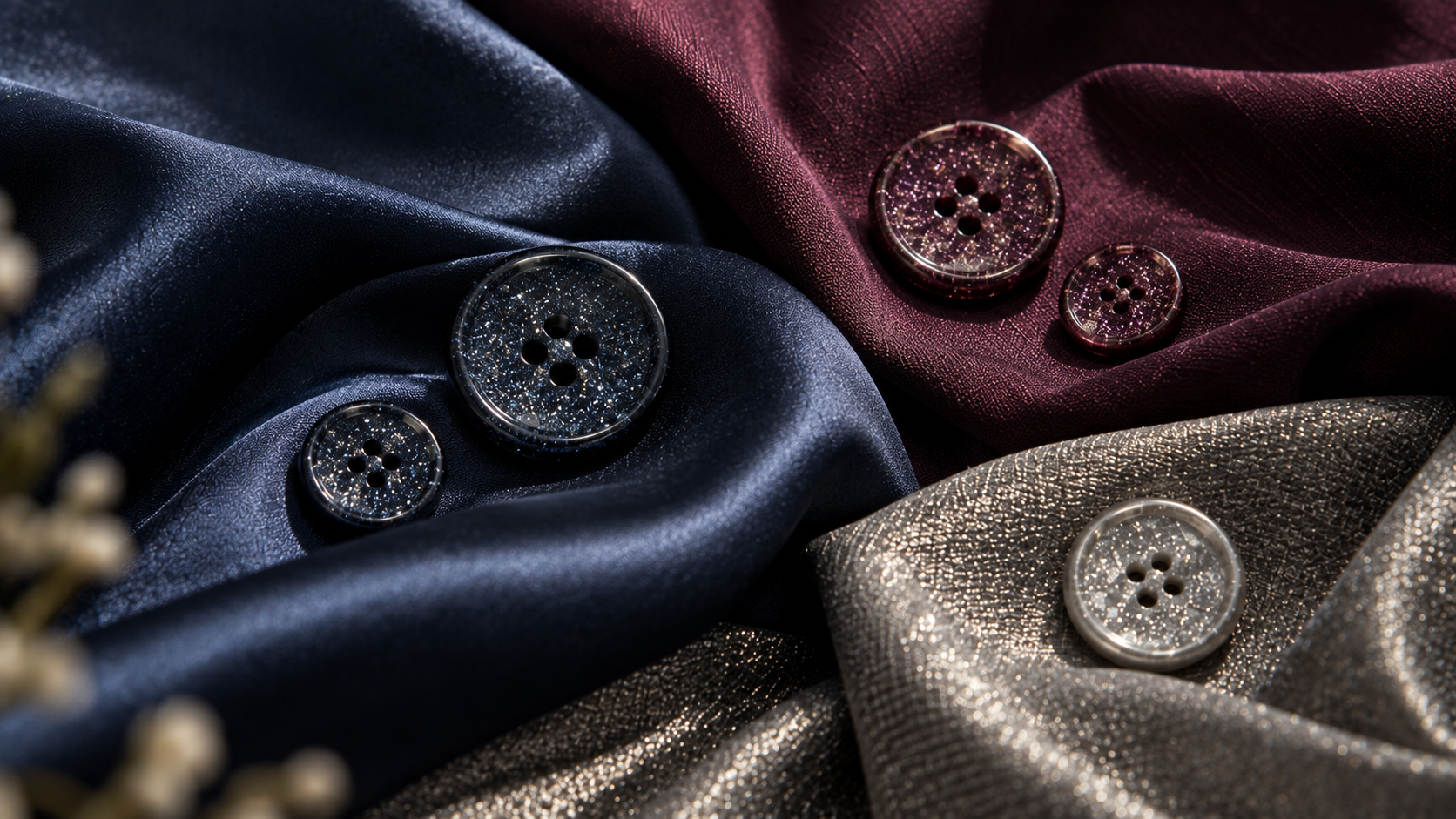
However, selecting a glitter button should involve more than simply choosing the strongest sparkle. Color, size, shape, finish and surrounding fabric all influence the final appearance.
1. Start with the Collection Mood
Consider the design direction of the garment first.
For a subtle detail, a glitter effect and color closer to the fabric may work well. If the button is intended to become a stronger design feature, greater contrast can be considered.
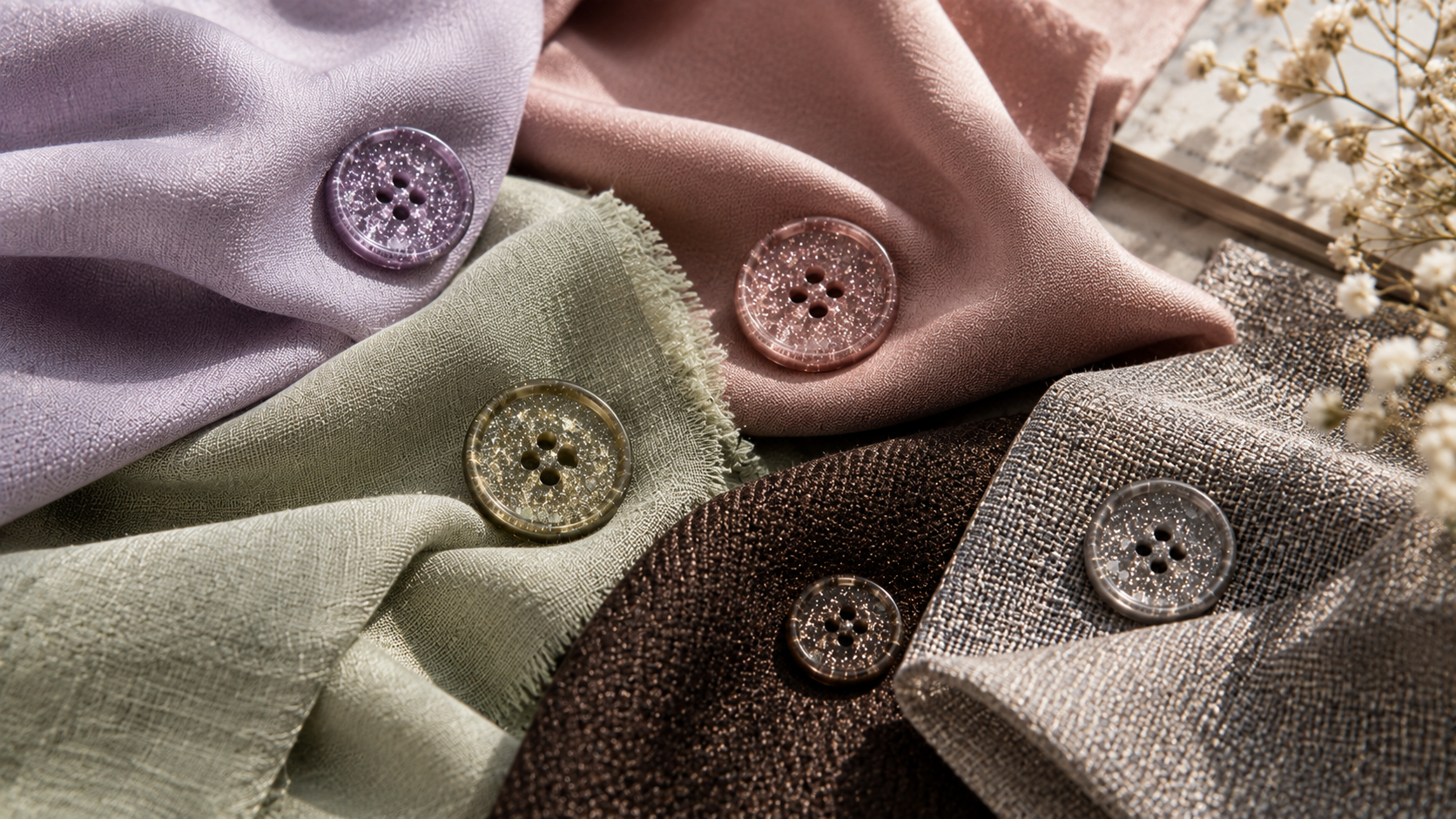
2. Evaluate the Button on the Actual Fabric
The same glitter button can look different when placed against different colors and fabric textures.
Evaluate physical samples with the intended fabric to understand color, contrast, texture and proportion.
3. Size Changes the Visual Impact
A small glitter button may function as a subtle detail, while a larger button can become a stronger visual element.
Select the size according to the button position and garment type.
4. Remember Function
Appearance matters, but when the glitter button is also a functional fastening, buttonhole size, thickness, sewing and garment requirements should also be evaluated.
5. Review Samples Before Bulk Production
Colors and effects viewed on a screen may not fully represent a physical button.
For fashion brands and garment manufacturers, reviewing an actual sample with the selected fabric is useful before bulk production.
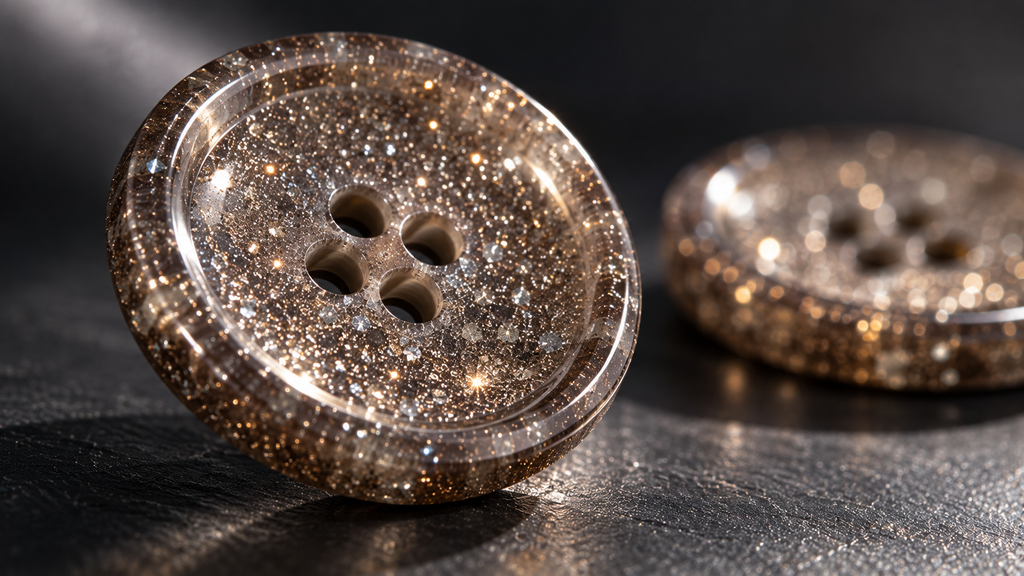
Small Details Can Add Character
Glitter buttons can become an effective fashion accent when selected in relation to fabric, color, size, finish and application.
Developing a new fashion collection? Contact Union Button to explore glitter button options, request samples or discuss your bulk-order requirements.
Contact us for inquiries or to place an order:
- 📲Line OA : https://lin.ee/nuYPCv7
- 🌐Website : www.union-button.com
- 📸IG : @unionbutton.bkk
- 🎵TikTok : @unionbutton.bkk
- Shopee : https://shopee.co.th/shop/1229406768
When requesting a quotation for polyester buttons, sending only a button photo may not provide enough information.
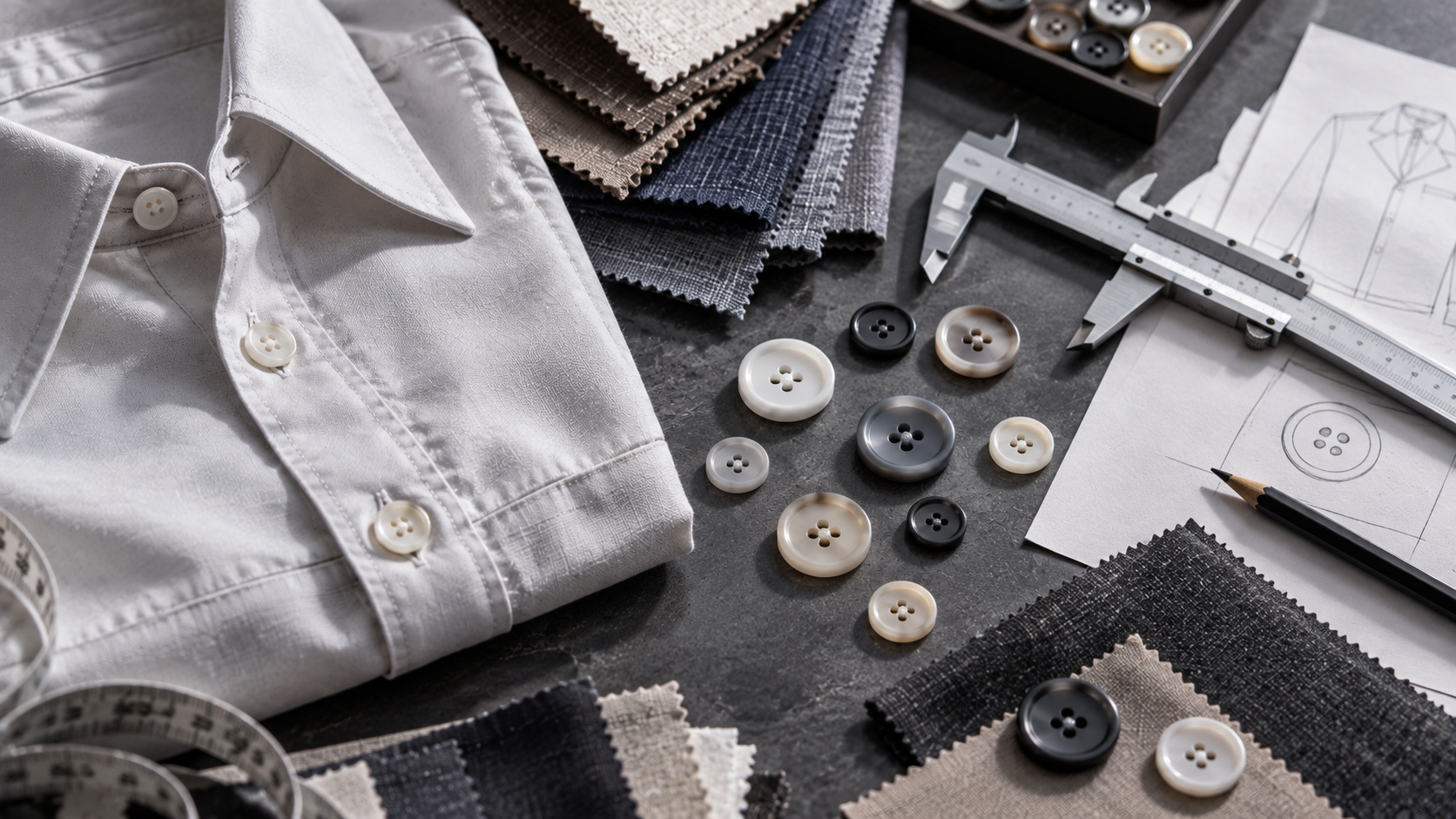
For garment factories, fashion brands and sourcing teams, clear specifications can help a button supplier understand the project more accurately.
1. Button Design
Specify the construction, such as 2-hole, 4-hole or shank, together with the shape and edge details.
Provide an existing sample or reference image when available.
2. Size
Specify the required size in Ligne (L) or millimeters. If the garment uses several button sizes, provide each size separately.
3. Thickness
Buttons with the same diameter do not necessarily have the same thickness.
Thickness can influence appearance and should be considered together with the fabric and buttonhole.
4. Color
Provide a clear color reference such as a fabric swatch or the color standard used for the project.
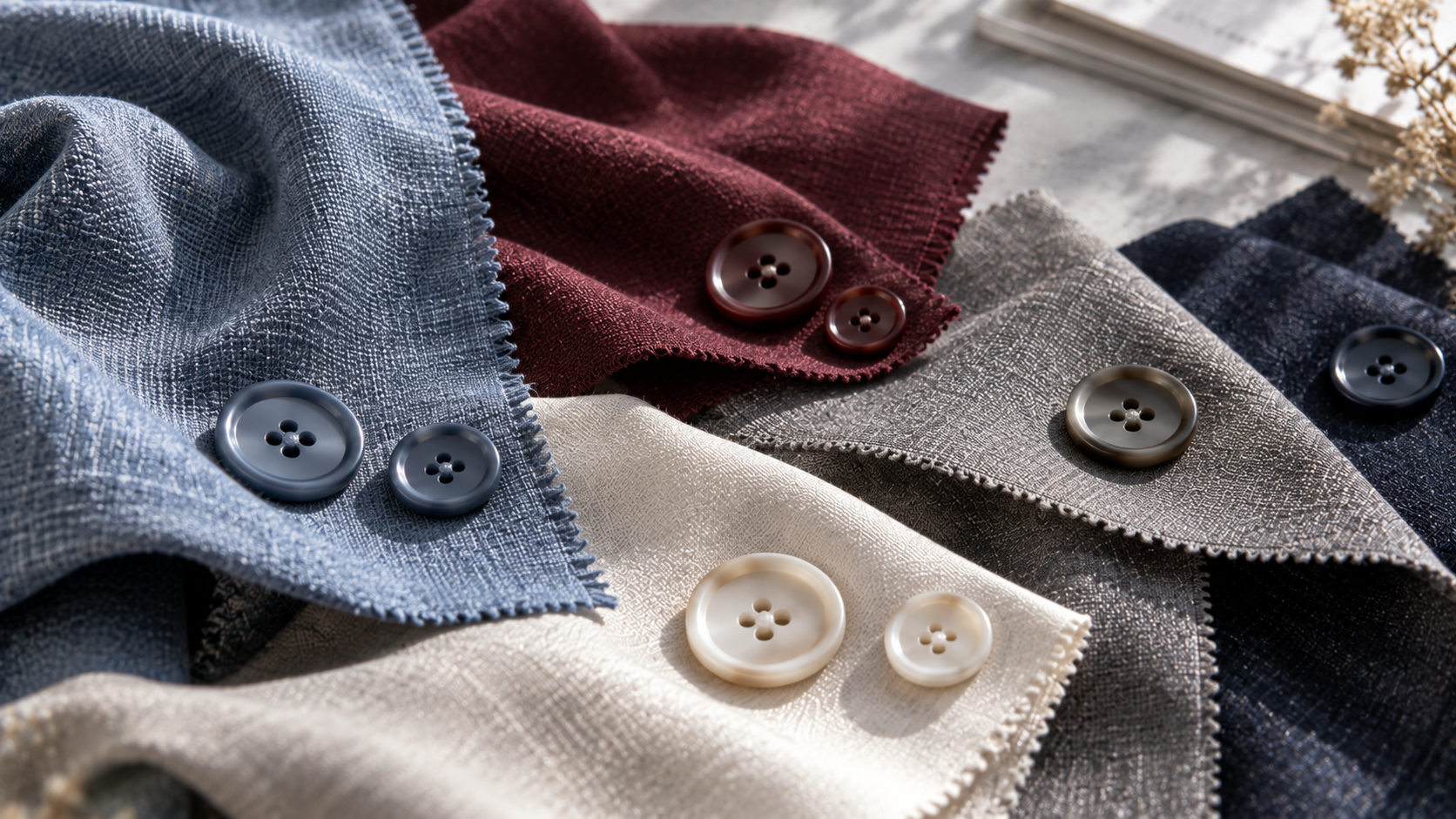
Color matching and acceptable tolerances depend on the material, production process and agreed requirements.
5. Finish
Specify the desired surface appearance, such as matte, semi-shiny or glossy.
Different finishes can noticeably change the appearance of a button even when similar colors are used.
6. Application
Explain whether the buttons will be used for shirts, trousers, jackets, uniforms or another garment type, together with any relevant special requirements.
Application information gives the supplier useful context beyond a reference photo.
7. Order Quantity
Provide the estimated quantity so the manufacturer can evaluate the project requirements.
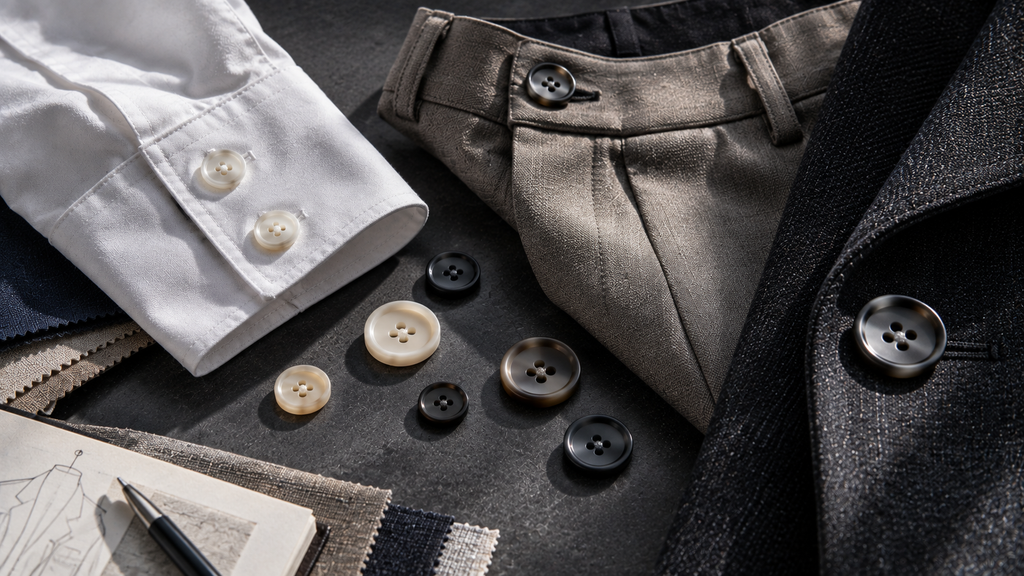
If the product is part of a repeat-order program, communicate this information as well.
Clear Specifications Make Sourcing Easier
Before requesting a quote for polyester garment buttons, prepare the design, size, thickness, color, finish, application and estimated quantity.
Clear information makes discussions about samples and production requirements more efficient.
Sourcing polyester buttons for a new garment project? Send Union Button your reference, specifications and estimated quantity to discuss samples and a bulk quotation.
Contact us for inquiries or to place an order:
- 📲Line OA : https://lin.ee/nuYPCv7
- 🌐Website : www.union-button.com
- 📸IG : @unionbutton.bkk
- 🎵TikTok : @unionbutton.bkk
- Shopee : https://shopee.co.th/shop/1229406768
When selecting garment components, attention often goes to distinctive designs. However, basic polyester buttons remain a versatile option for many types of clothing.
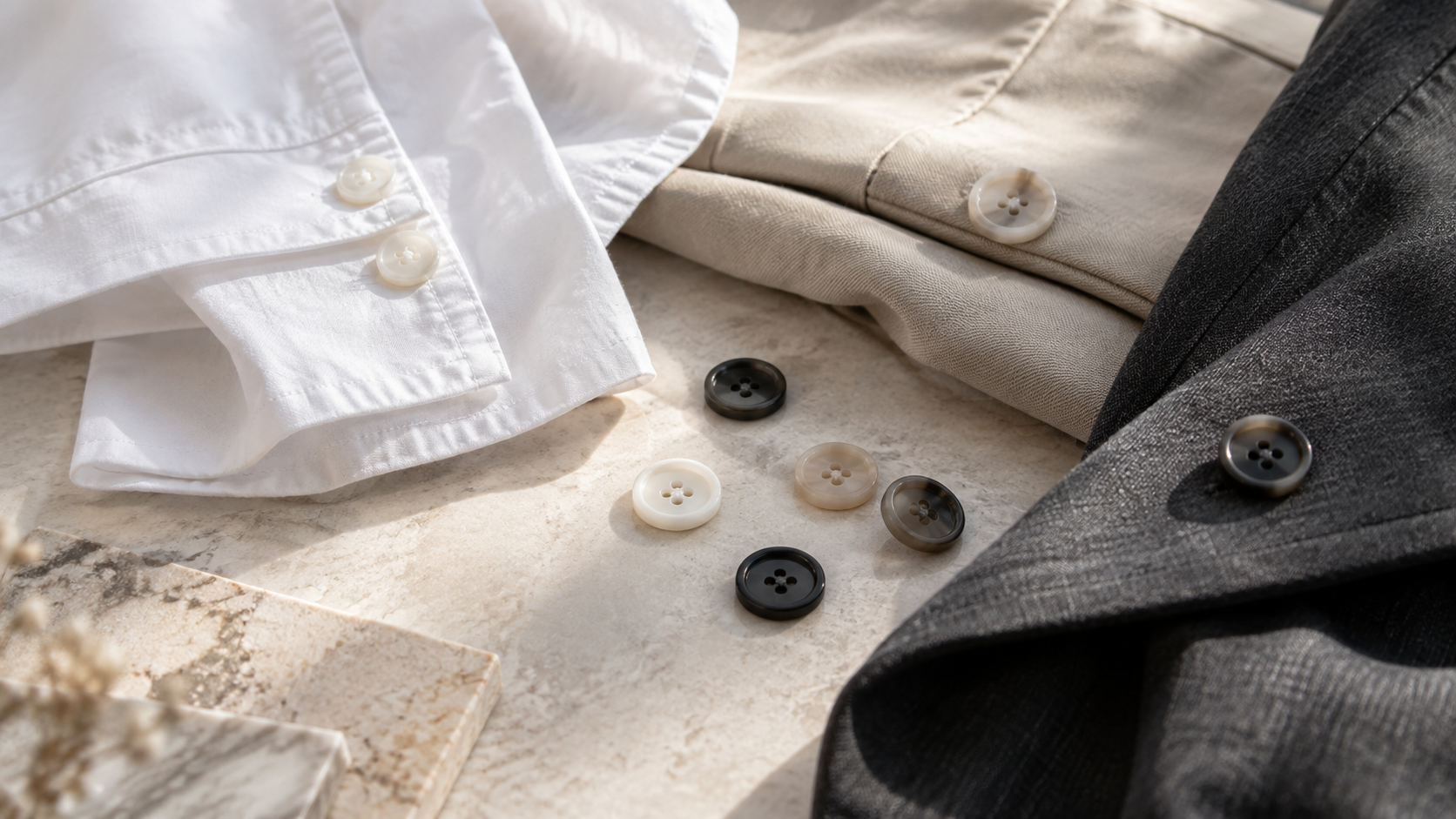
For fashion brands and garment manufacturers, selecting the right basic button involves more than choosing a simple shape.
What Is a Basic Polyester Button?
A basic polyester button is made from polyester and typically features a practical design such as a round 2-hole or 4-hole shape.
Even within basic designs, details such as edge profile, curvature, thickness, color and finish can vary considerably.
These buttons can be considered for many garment applications, including shirts, blouses, polo shirts, trousers, jackets and uniforms.
Basic Does Not Mean Every Button Is the Same
Small design differences can influence the appearance of a garment.
A thicker edge can create a different look from a thin edge, while matte and glossy finishes can produce noticeably different visual effects.
Designers and product developers should therefore consider shape, edge, thickness, hole design, color and finish together.
Consistency Matters for Bulk Production
For bulk garment production, evaluating a single attractive sample is not enough.
Consistency in color, size, shape and finish should also be considered, together with compatibility with the fabric and buttonhole.
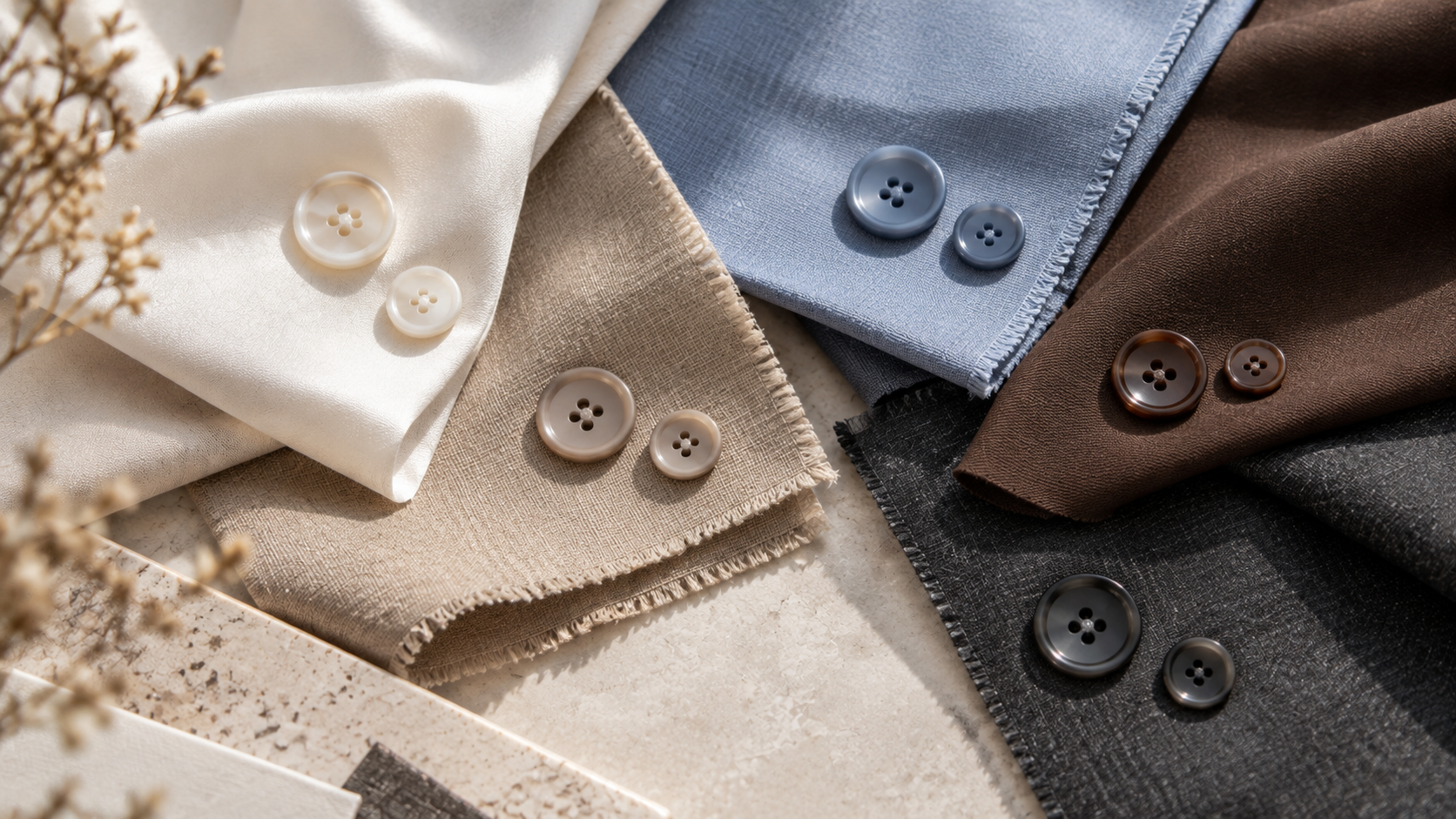
For repeat-order programs, clearly defined specifications and color references can also help communicate requirements to the button manufacturer.
Select Basic Buttons According to the Application
A simple button can still be an important garment detail.
Start with the intended application, then consider material, size, color, finish and production requirements.

Union Button Corp., Ltd. manufactures a wide range of polyester garment buttons for fashion brands, garment manufacturers and B2B customers.
Looking for basic polyester buttons for your next project? Contact our team to request samples or discuss a bulk quotation.
Contact us for inquiries or to place an order:
- 📲Line OA : https://lin.ee/nuYPCv7
- 🌐Website : www.union-button.com
- 📸IG : @unionbutton.bkk
- 🎵TikTok : @unionbutton.bkk
- Shopee : https://shopee.co.th/shop/1229406768
When developing a garment, attention often goes to fabric, color, patterns and construction. However, garment buttons are another detail that should not be overlooked.
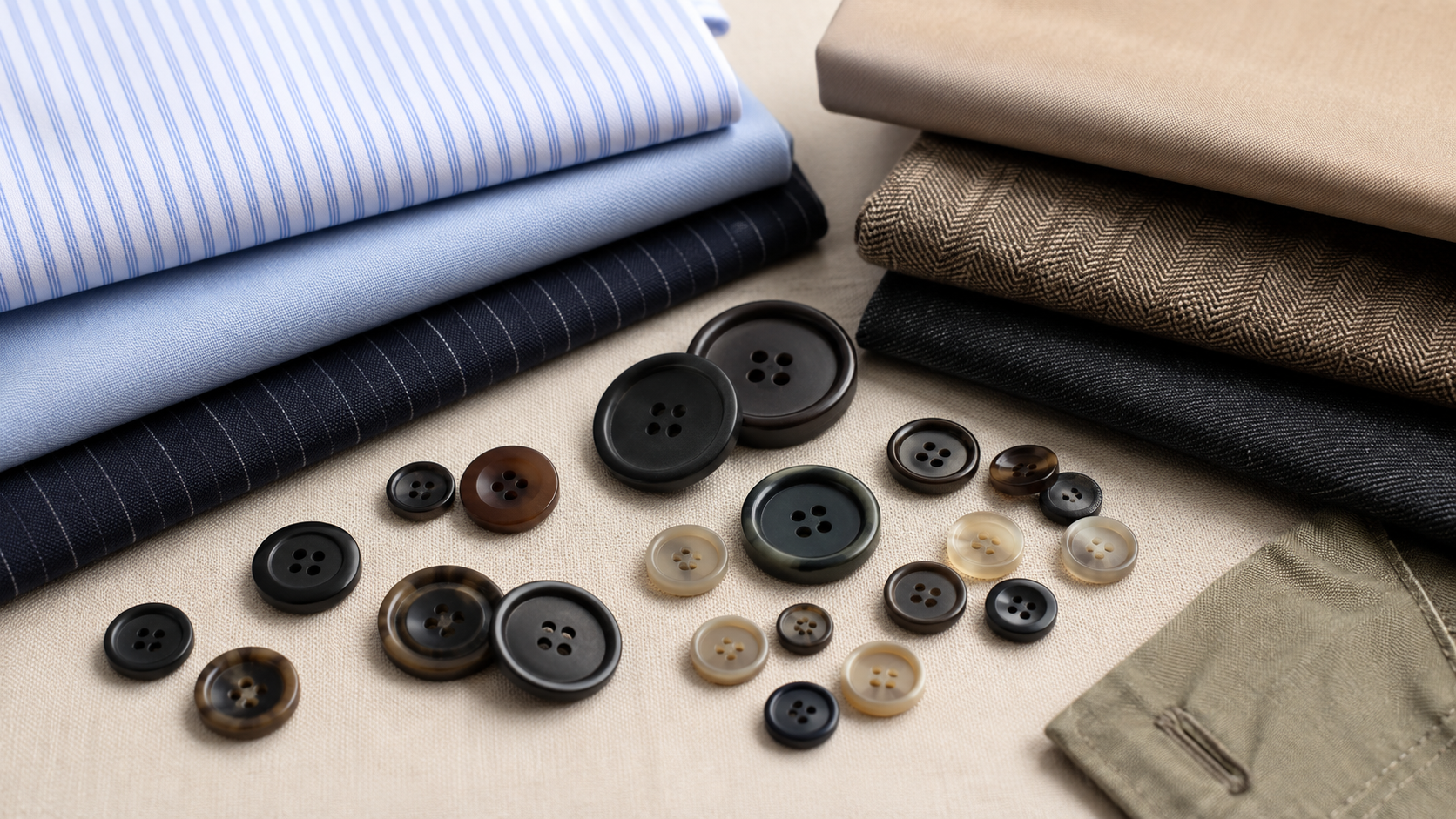
A button is not simply a fastening component. It can influence the function, appearance and overall quality of a garment.
1. Buttons Should Match the Application
Shirts, suits, trousers, uniforms and workwear have different requirements.
Button material, size, thickness, shape and required performance should therefore be considered according to the garment application.
Certain garments may require impact resistant or heat resistant buttons, while fashion garments may place greater emphasis on color, texture and design.
2. Color and Design Affect the Garment
Changing a button from a matching color to a contrasting color can noticeably change the overall appearance of the same garment.
Fashion designers and product developers should therefore consider button color, finish, shape and material together with fabric selection.
3. Consistency Matters in Bulk Production
For garment factories and fashion brands producing at scale, consistency in button size, color, shape and finish is important.
Samples and specifications should be evaluated carefully before placing a bulk or wholesale button order.
4. Buttons Must Work with Production Requirements
A good button should not only look right.
Its size should work with the buttonhole, its thickness should be appropriate, and its characteristics should suit the intended garment and production process.
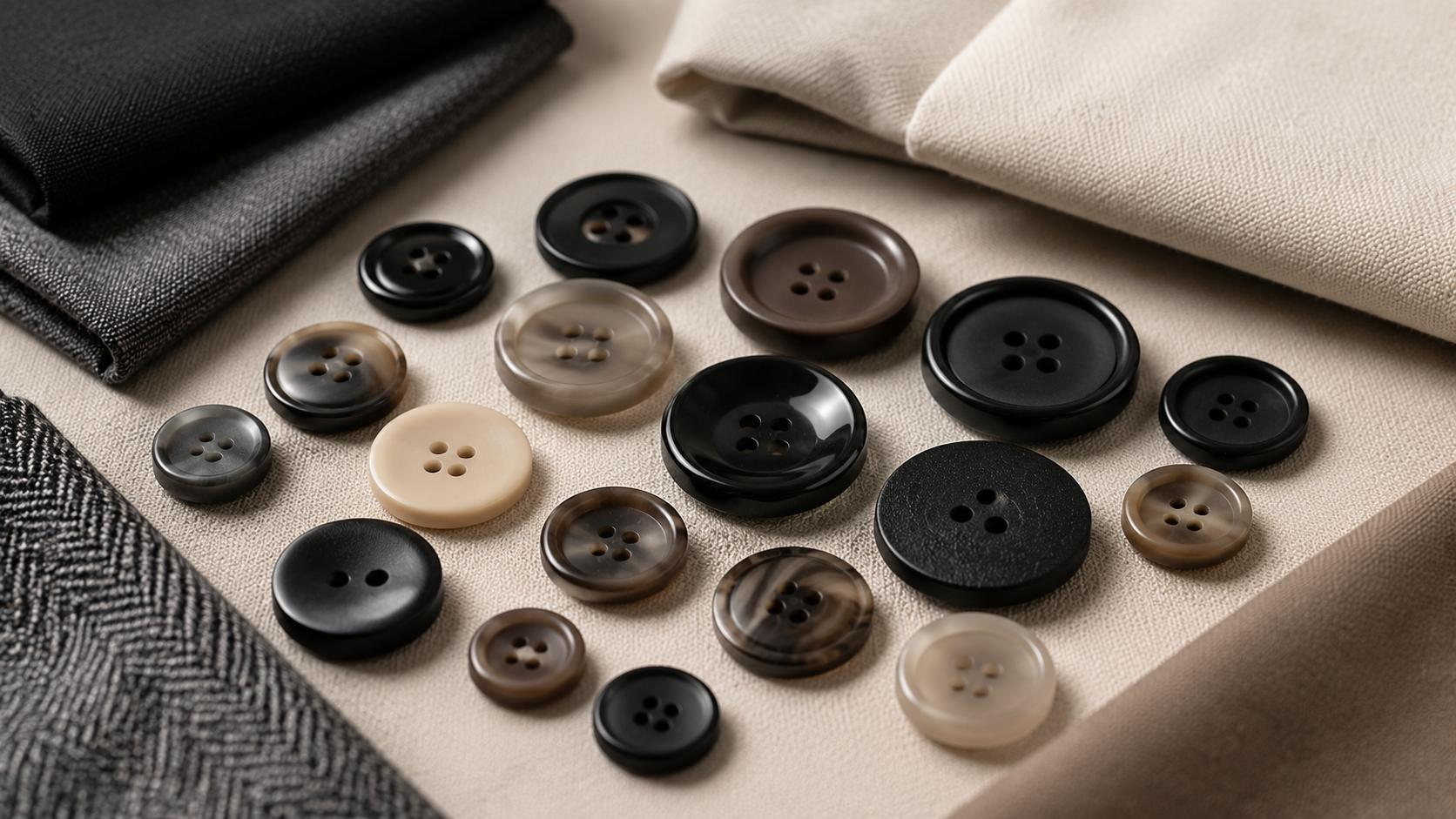
This is why working with a button supplier or button manufacturer that understands both materials and applications can be valuable.
Buttons may be small components, but choosing them carefully can help design, function and production work together more effectively.
Looking for buttons for your next garment project? Contact Union Button to discuss your requirements or request samples.
Contact us for inquiries or to place an order:
- 📲Line OA : https://lin.ee/nuYPCv7
- 🌐Website : www.union-button.com
- 📸IG : @unionbutton.bkk
- 🎵TikTok : @unionbutton.bkk
- Shopee : https://shopee.co.th/shop/1229406768
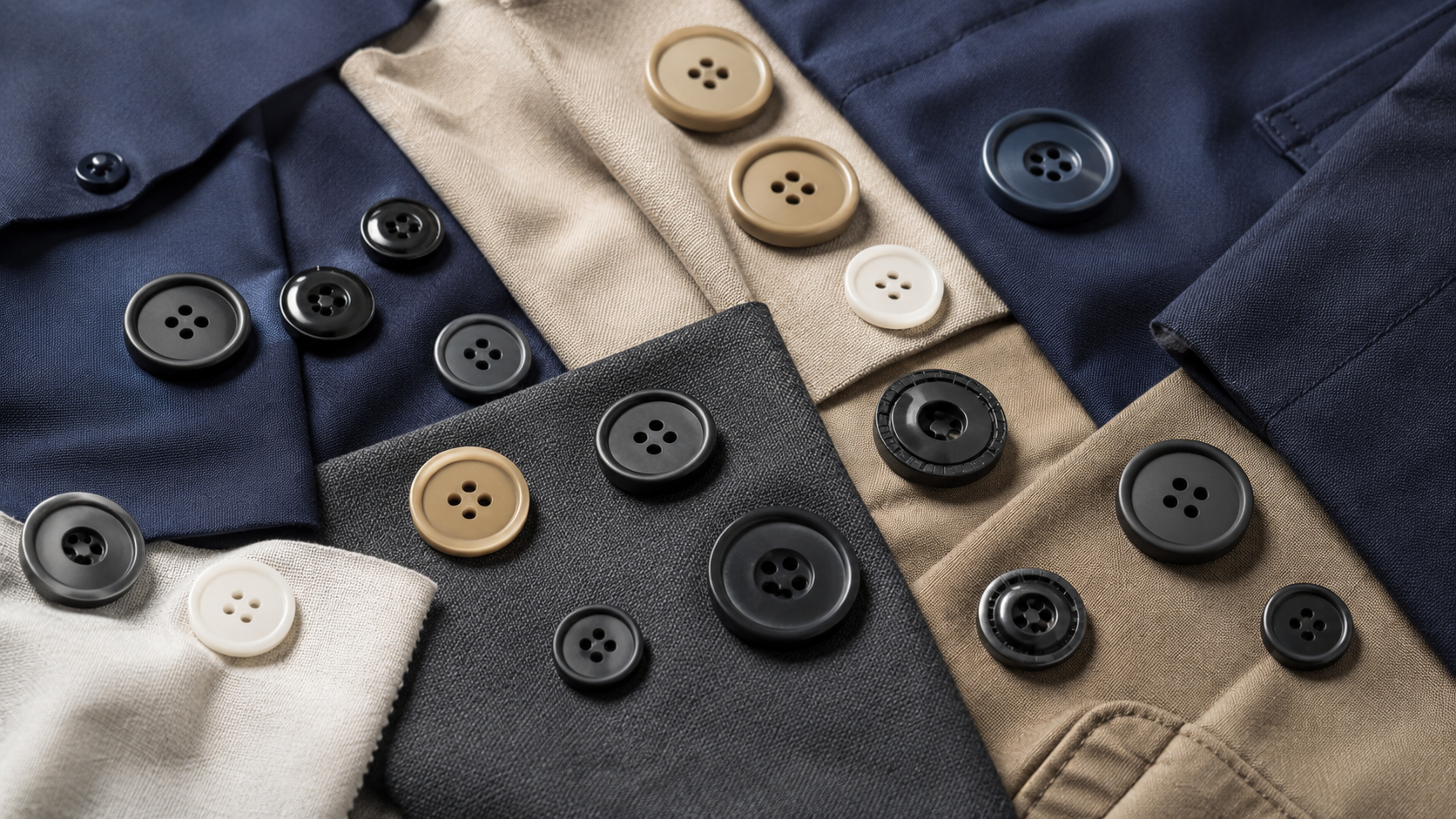
Buttons for uniforms and workwear may look similar to standard garment buttons, but selecting the right option requires more than choosing a color and design.
For garments that may be worn and washed regularly, factors such as function, material, durability and garment-care requirements should be considered.
1. Start with the Application
Before selecting a button, understand how the garment will be used.
Applications may include corporate uniforms, hospitality uniforms, factory uniforms, industrial workwear and school uniforms.
Each application can have different requirements.
2. Select the Appropriate Material
Polyester buttons can be used for a wide range of garments and can be developed in different colors, shapes and finishes.
Applications with specific performance requirements may require other materials or button characteristics depending on the intended use.
3. Durability Should Match the Application
A durable button is not necessarily the same button for every application.
Some garments may require impact resistant buttons or heat resistant buttons, depending on their performance requirements and relevant testing.
4. Consistency Matters for Uniform Programs
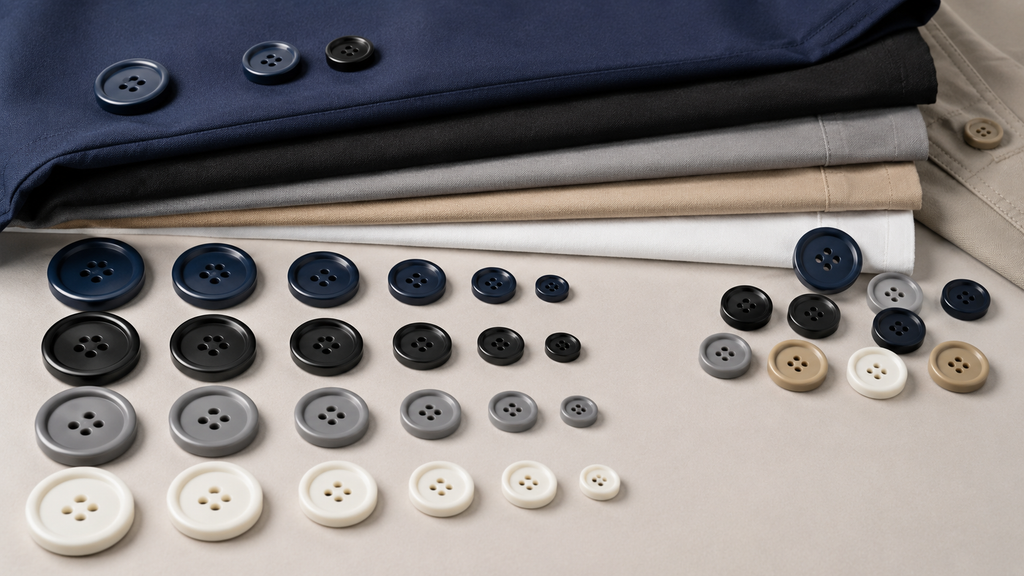
For uniforms produced in large quantities or through repeat orders, consistency in color, size, shape and finish is important.
This becomes particularly relevant when multiple button sizes are used within the same uniform program.
5. Evaluate Samples Before Bulk Production
Evaluate button samples together with the actual fabric and check buttonhole compatibility, appearance and function before bulk production.
If your project has specific durability, washing or performance requirements, communicate them to your button manufacturer during product development.
The Right Button Should Fit the Application
For uniform and workwear manufacturers, button selection should consider material, function, durability, consistency, cost and production requirements rather than appearance alone.
Developing a new uniform or workwear program? Contact Union Button to discuss your button requirements, request product information or request samples.
Contact us for inquiries or to place an order:
- 📲Line OA : https://lin.ee/nuYPCv7
- 🌐Website : www.union-button.com
- 📸IG : @unionbutton.bkk
- 🎵TikTok : @unionbutton.bkk
- Shopee : https://shopee.co.th/shop/1229406768
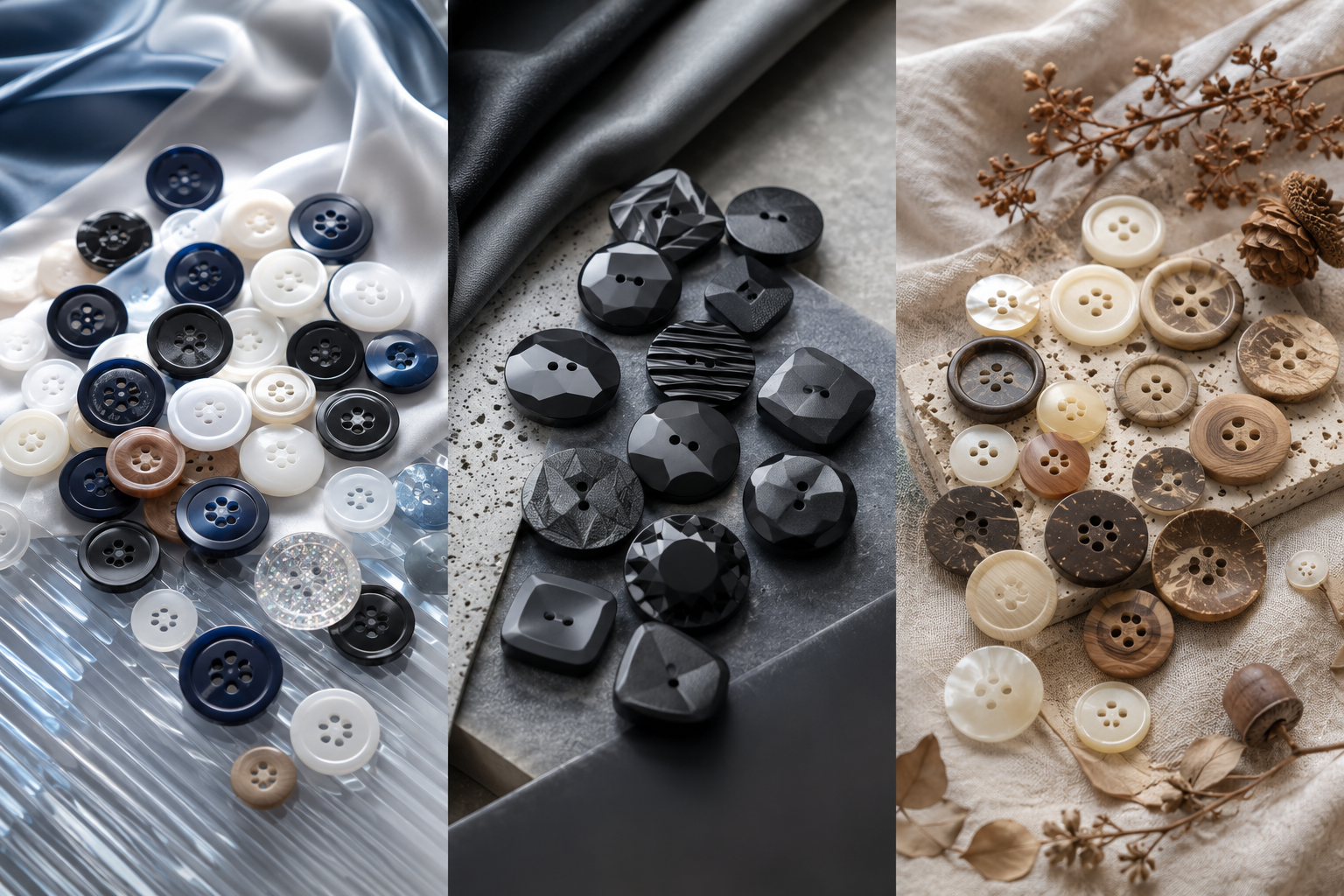
Choosing the right garment buttons involves more than color and shape. Button material can affect appearance, function, production requirements and cost.
For fashion brands, designers and garment manufacturers, understanding the differences between common button materials can help make product development easier.
Polyester Buttons – Versatile Design Options
Polyester buttons can be developed in a wide variety of colors, shapes, patterns and finishes, making them suitable for shirts, fashion garments, suits, trousers and many other applications.
Polyester can also be developed to create natural-inspired appearances such as imitation wood, horn, shell or pearl.
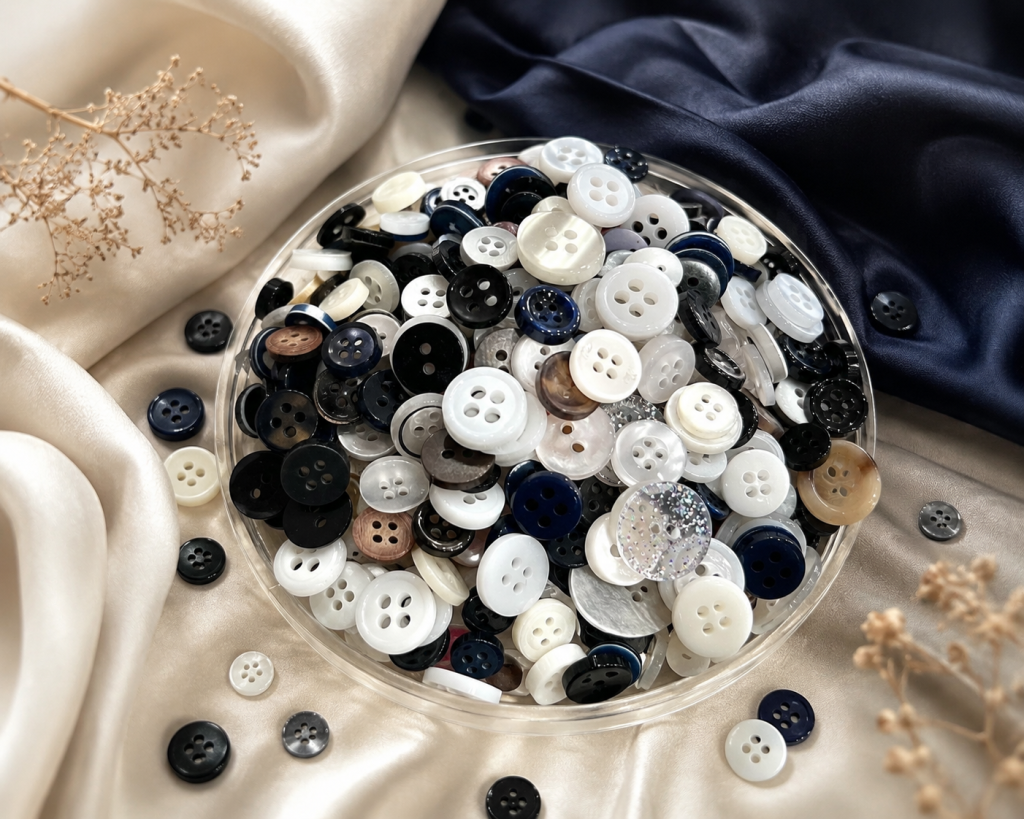
Nylon Buttons – Flexible for Different Shapes
Nylon buttons can be manufactured through injection molding, allowing a variety of shapes and designs.
Material grade, shape, thickness, color and garment requirements should all be considered when selecting a nylon button.
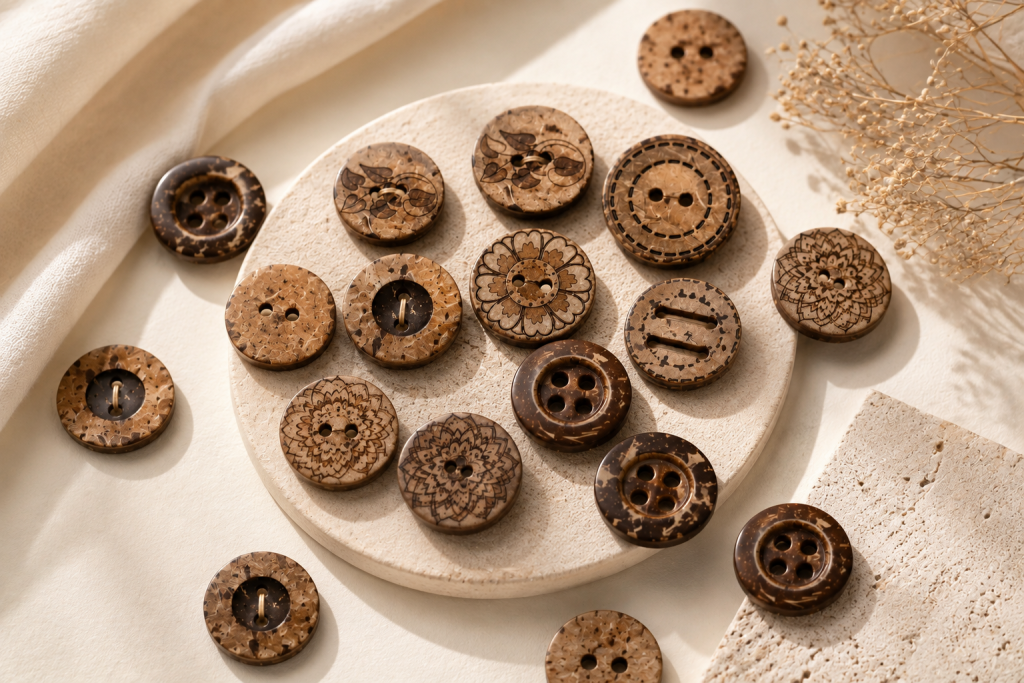
Natural Buttons – Natural Texture and Character
Natural buttons, including wood, coconut and shell buttons, offer textures and patterns created naturally by the material.
They can be suitable for garments that require a natural or craft-inspired appearance. However, natural variations in color and pattern should be considered when consistency is important for bulk production.
Which Button Material Is Right for Your Garment?
There is no single button material that is ideal for every garment.
The right choice should consider material, function, durability, design, color, cost and production requirements together.
Working with an experienced button manufacturer during product development can help you select a button that fits both the design and practical requirements of your garment.
Union Button Corp., Ltd. is a button manufacturer in Thailand producing a wide range of garment buttons and accessories for fashion brands, garment manufacturers and B2B customers.
Developing a new garment or collection? Contact our team to discuss your button requirements or request samples for evaluation.
Contact us for inquiries or to place an order:
- Website : www.union-button.com
- 📲Line OA : https://lin.ee/nuYPCv7
- 🌐Website : www.union-button.com
- 📸IG : @unionbutton.bkk
- 🎵TikTok : @unionbutton.bkk
- Shopee : https://shopee.co.th/shop/1229406768